How much does it cost to hire a general contractor in Los Angeles, CA? In 2026, most homeowners land somewhere between $200 and $600 per square foot for general construction, with the contractor's fee already built into that number. That spread rarely comes down to square footage alone; it comes down to which pricing model, cost-plus, fixed-price, or hourly, the bidder in front of you is actually using.
This guide breaks out the real 2026 numbers by pricing model and project type, flags a licensing rule that changed last year and still trips up homeowners, and gives you a short checklist for telling a fair bid from a padded one.
Visit Olis Wood to see our services and request a free estimate.
General Contractor Cost in Los Angeles at a Glance
Before digging into project-specific numbers, here's how Los Angeles general contractors typically bill once you strip away the marketing language.
| Pricing Model | Typical LA Range | Best Fit |
|---|---|---|
| Cost-plus (percentage fee) | 15%-25% of total project cost | Remodels with unknowns, older homes, scope likely to change |
| Fixed-price (flat quote) | Markup built into one number | Clearly scoped, well-documented projects |
| Time and materials | Hourly labor + material cost, no blended markup | Smaller jobs, repairs, open-ended punch lists |
| Hourly consulting rate | Roughly $50-$150/hour | Pre-construction planning, small tasks, estimating |
None of these numbers tell you much on their own. A $300,000 remodel at a 15% cost-plus fee and a $300,000 remodel quoted flat at $345,000 can land at nearly the same final bill. The difference shows up only when the scope changes mid-project, which is exactly when cost-plus contracts move and fixed-price contracts don't (unless a change order gets signed).
How Cost-Plus and Fixed-Price Contracts Actually Compare
A cost-plus contract means you pay actual labor and material costs, plus an agreed percentage covering the contractor's overhead and profit. That percentage runs 15% to 25% in Los Angeles for most residential work. The upside is transparency: you can see exactly what materials and labor cost. The tradeoff is less price certainty, since the final number can move if conditions change once walls open up.
A fixed-price contract rolls that same markup into a single quoted number instead of listing it separately. It tends to feel safer on paper, but only because the contractor has already padded in contingency on their end.
| Factor | Cost-Plus | Fixed-Price |
|---|---|---|
| Cost certainty | Lower, final number can move | Higher, locked in upfront |
| Flexibility for changes | High | Low, change orders cost extra |
| Best-fit project | Renovations with unknowns (older homes) | Clearly defined, well-documented scope |
| $100K project, example total | ~$115K-$125K | ~$105K-$115K quoted flat |
| $300K project, example total | ~$345K-$375K | ~$315K-$345K quoted flat |
Ask every bidder which structure they're quoting before you compare dollar figures. A lower number on paper sometimes just means a less complete scope, not a better deal.
2026 Los Angeles Construction Costs by Project Type
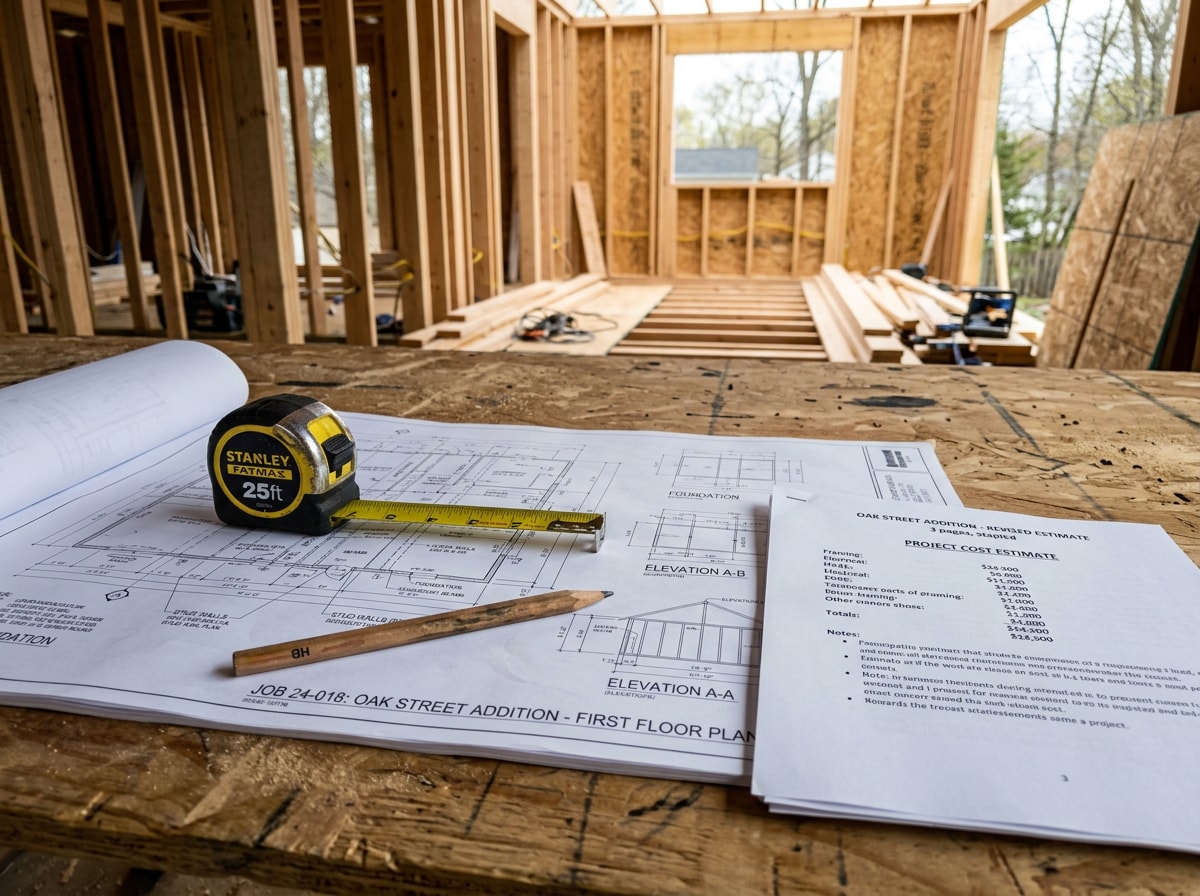
General construction costs in LA vary widely by scope and finish level:
| Project Type | 2026 Cost Range | What Drives the Spread |
|---|---|---|
| General construction / remodel | $200-$600 per sq ft | Finish level, site access, existing conditions |
| Room addition | $300-$500 per sq ft | Foundation, framing, utility tie-ins |
| Second-story addition | $350-$600 per sq ft | Structural and foundation reinforcement |
| Seismic retrofit (pre-1978 soft-story) | $60,000-$150,000 total | Engineering scope and existing structural condition |
| ADU (conversion or ground-up) | Tracks the general construction range above | Conversions typically run cheaper than ground-up builds |
| Deck, patio, or fence addition | Priced per project, not per sq ft of the home | Material, linear footage, grade changes |
That last row matters more than it looks. A new deck, a patio cover, or a privacy fence usually doesn't need a full general contractor at all. It's typically handled under a single specialty trade license, which is often faster to schedule and cheaper than routing it through a GC's markup. If that's the scope you're actually pricing, our deck builder and fence contractor teams quote those projects directly.
Build in a contingency of 10% to 15% above whatever number you're quoted. Material input costs for construction have been under sustained upward pressure industry-wide, according to the Bureau of Labor Statistics' Producer Price Index data for construction inputs, so treat any single-year inflation figure you see elsewhere as a directional signal rather than a fixed rule.
What You're Actually Paying For
A general contractor is the licensed professional who manages a construction or renovation project from permit to final inspection. For an LA homeowner, that means one person, not a dozen separate trades, is accountable for the budget, the schedule, and the finished result.
That accountability covers:
- Upfront planning and budget management before a shovel touches the ground
- On-site quality control, checking completed work against code and spec
- Coordinating inspections and sign-offs so the project doesn't stall mid-build
- Managing every plumber, electrician, roofer, and inspector so you field one phone call instead of five
- Direct contact with the Los Angeles Department of Building and Safety to pull permits and schedule inspections
That last point is where a local GC earns their fee. LADBS permits and code compliance aren't optional paperwork; they're the line between a legal remodel and one that creates problems at resale. A contractor who works LA jobsites regularly can also anticipate which inspections your project will trigger, which keeps the schedule from stalling on avoidable surprises.
A general contractor also brings an established bench of vetted, licensed subcontractors to the job and supervises each trade directly. In a market where finding reliable tradespeople on your own is genuinely difficult, that network is often the real value behind the fee, not just the project management.
The Licensing Rule That Changed in 2025 (and Still Trips Up Homeowners)
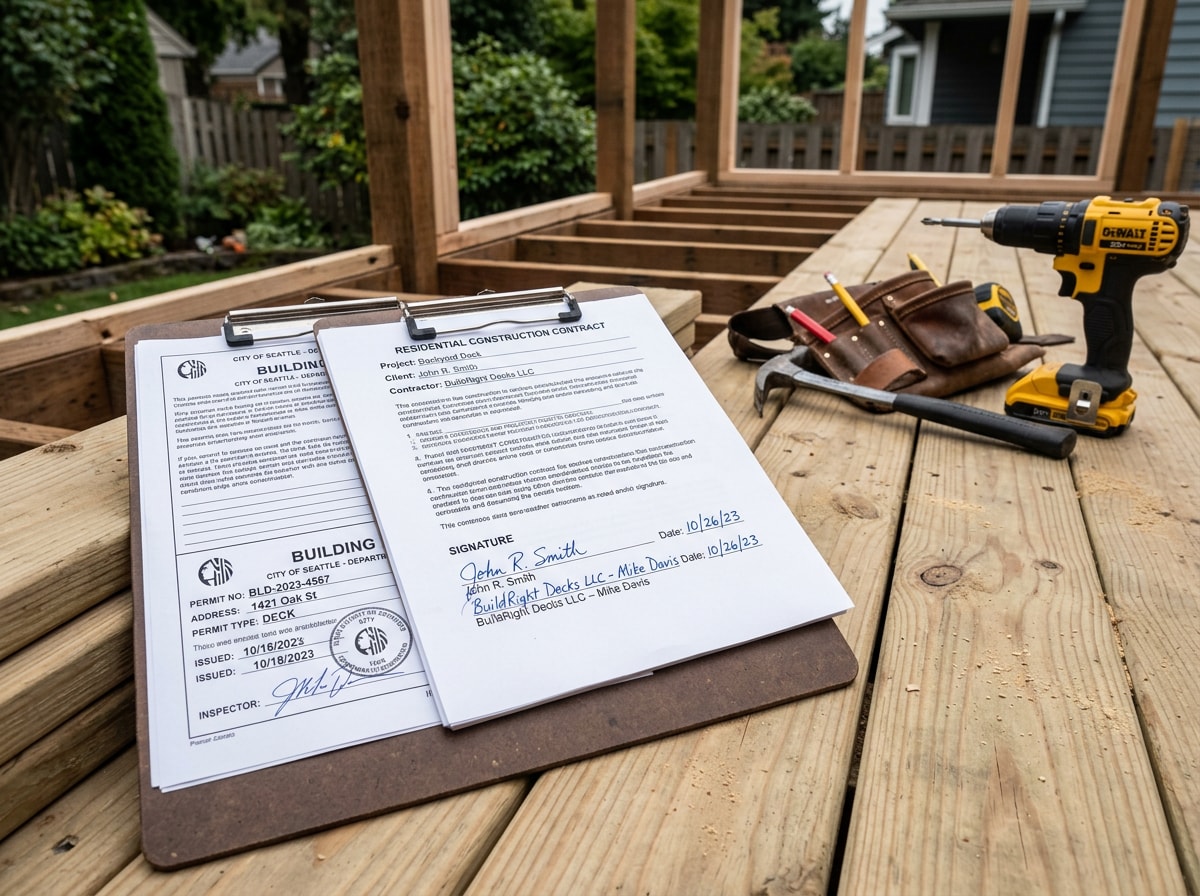
In California, anyone who builds or alters a structure must hold a license through the California Contractors State License Board once a job's total cost, labor and materials combined, reaches a set dollar threshold. For years that threshold was $500. It isn't anymore.
CSLB's own December 2024 announcement confirmed that Assembly Bill 2622 raised the handyperson exemption to $1,000, effective January 1, 2025. The catch homeowners miss: the higher number only applies if the job needs no permit at all and the unlicensed person hires nobody to help. A $700 job that requires a permit still legally requires a licensed contractor. A lot of advice still floating around online quotes the old $500 figure, so don't assume a bid or a handyman's pitch is current just because it sounds familiar.
Licensing tiers matter beyond that threshold too. A specialty contractor can legally handle a single trade with no permit needed under $10,000. Anything involving two or more trades, structural changes, a required permit, or a budget over $10,000 calls for a general contractor. A B-license GC is specifically qualified to coordinate all trades under one contract, including insurance coordination across subcontractors.
Skipping this step carries real risk. Hiring unlicensed help on a job that legally requires a licensed GC can leave you with no recourse if something fails inspection or isn't built to code, and insurance typically won't cover work performed outside licensing requirements.
Traditional General Contractors vs. Design-Build Contractors
Most LA homeowners need a traditional general contractor for projects like a kitchen renovation, a bathroom remodel, a new deck or patio structure, a full-home remodel, or converting a garage into an ADU. As a rough threshold, once a project's cost reaches $15,000 or more, bringing in a licensed GC instead of managing trades yourself becomes the more reliable path.
A design-build contractor folds design and construction under one contract, which can simplify communication on larger or more design-heavy projects. For most standard remodels and exterior builds, though, a traditional GC or specialty-trade model remains the more common, and often more cost-predictable, route. If you're weighing a custom structure like a pergola or covered patio, that's usually a specialty-carpenter scope rather than a full design-build engagement.
If your project is a commercial build-out rather than a home remodel, cost drivers shift considerably. We cover that in more detail in our guide to retail general contractors in Los Angeles.
Browse our full project gallery to see completed work before you shortlist bidders.
How to Get a Fair Bid in Los Angeles
Strong LA general contractors communicate directly and know how to work within local rules set by LADBS and the CSLB. Before signing anything:
- Verify the contractor's license number directly through CSLB, not just by taking their word for it
- Ask for recent references and actually call them
- Confirm active liability insurance and workers' comp
- Get three bids on the same written scope of work, not three different interpretations of the job
- Ask each bidder which contract structure (cost-plus, fixed-price, or time and materials) they're quoting before comparing totals
Remodel costs in LA shift based on neighborhood, permit requirements, and current material supply, so competitive bidding on identical specifications is one of the most reliable ways to spot an outlier, high or low. We work across the San Fernando Valley, including West Hills, Chatsworth, Woodland Hills, Canoga Park, Winnetka, and Tarzana, and we've seen firsthand how often a scope mismatch, not a dishonest bidder, explains a wide spread between quotes.
Ready to compare a real number against the ranges above? Get a free estimate and we'll walk the scope with you before you sign anything.
FAQ
What's the difference between a general contractor and a handyman in California?
A general contractor holds a California B-license, can coordinate two or more trades, pull LADBS permits, and legally handle any project requiring a permit regardless of cost. A handyperson can only take on unpermitted work under $1,000 in combined labor and materials, and only if they hire no one to help. That threshold moved up from $500 to $1,000 on January 1, 2025 under AB 2622.
What's a typical general contractor markup in Los Angeles?
Typical GC fee percentages in LA run 15% to 25% over actual labor and material costs under a cost-plus structure. Fixed-price contracts build that markup into the quoted total instead of listing it separately.
Should I hire a general contractor or manage subcontractors myself?
For projects under roughly $15,000 involving a single trade, managing subcontractors yourself can work fine. Anything larger, structural, multi-trade, or permit-heavy generally calls for a licensed GC to handle coordination and liability.
Do general contractors in LA charge by the hour or a percentage of the project?
Both exist. Some contractors bill hourly, roughly $50 to $150 per hour, while most residential projects use a percentage-based cost-plus fee or a single fixed project price instead.
Is it cheaper to act as your own general contractor on a remodel?
Sometimes, on paper, since you skip the GC's markup. In practice, you take on the scheduling, permit pulls, and liability a GC normally absorbs, and a single scheduling misstep (a trade showing up before inspection sign-off, for example) can erase any savings fast.
How much contingency should I budget above a contractor's estimate?
Plan for 10% to 15% above whatever number you're quoted, regardless of project type. Material costs have been under sustained upward pressure, and older LA homes in particular tend to reveal surprises once walls or foundations are opened up.