A licensed concrete contractor Burbank, Glendale & The Valley homeowners can actually verify, not just one with nice photos, is the difference between a slab that lasts 30 years and one that cracks after the first wet winter. This guide breaks down the licensing rules that changed in 2025, what a real project timeline looks like, and what driveways, patios, and footings typically cost across the Valley. We wrote it from the contractor's side of the table, not a marketing template.
What a Licensed Concrete Contractor Handles in the San Fernando Valley
Concrete work in Burbank, Glendale, and the Valley rarely stands alone. Most residential jobs are tied to a bigger outdoor project: a new patio, a fence line, a pergola footing, or a driveway that needs to match a hardscape renovation. A contractor who understands both the concrete and the structure built on top of it avoids the finger-pointing that happens when two separate trades blame each other for a problem.
Concrete Driveways
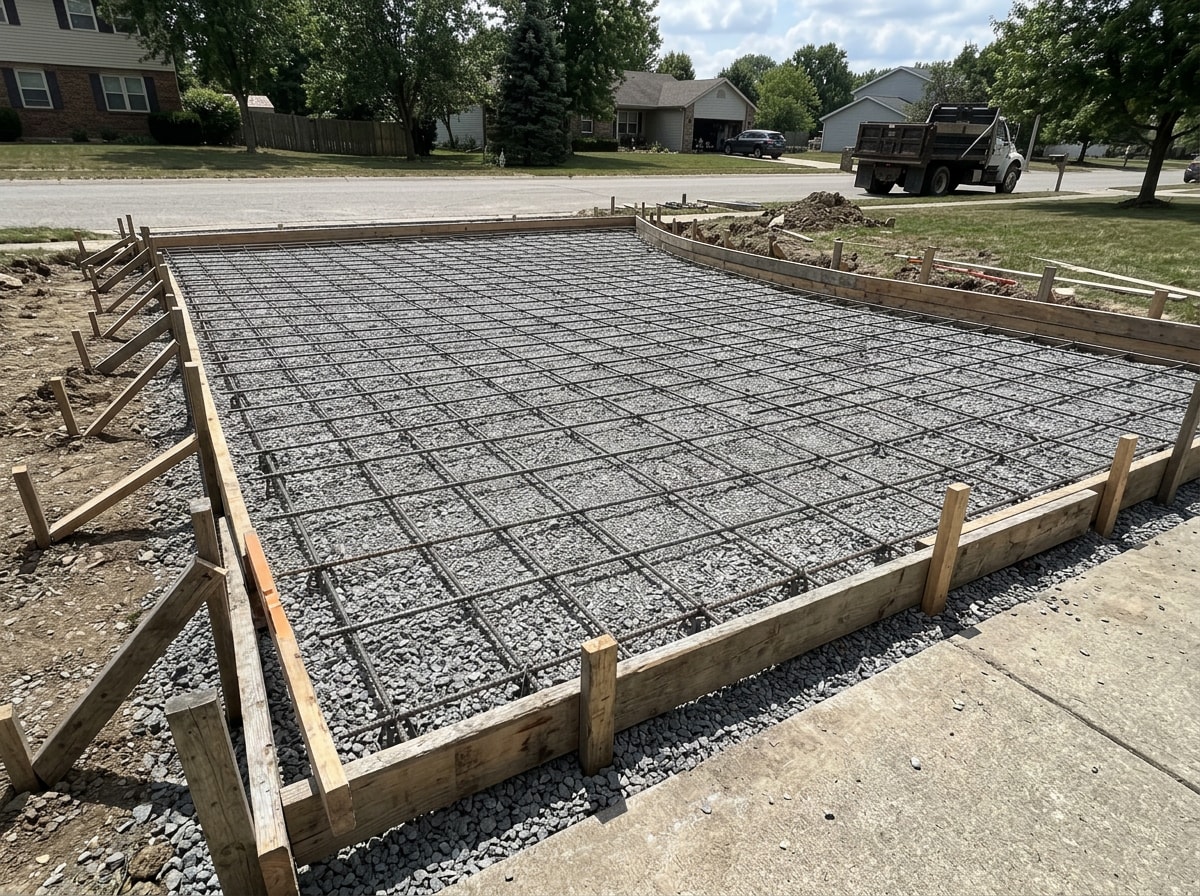
Driveway work starts with excavation, a compacted aggregate base, and steel reinforcement before any concrete gets poured. Expansive clay soil is common in Valley-adjacent neighborhoods, and it shifts with seasonal moisture more than soil in coastal Los Angeles. A contractor who skips extra base compaction here is setting the slab up to crack within a few years.
Stamped and Decorative Patios
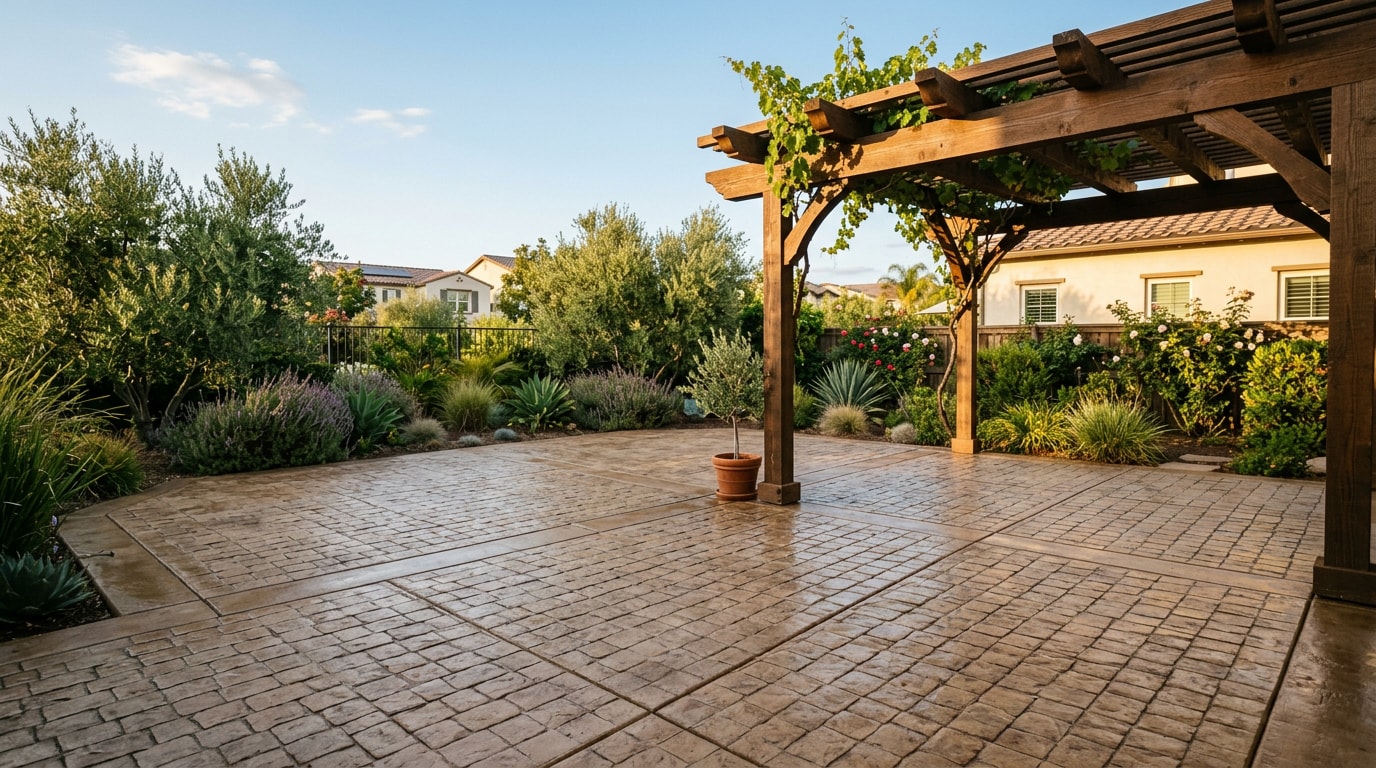
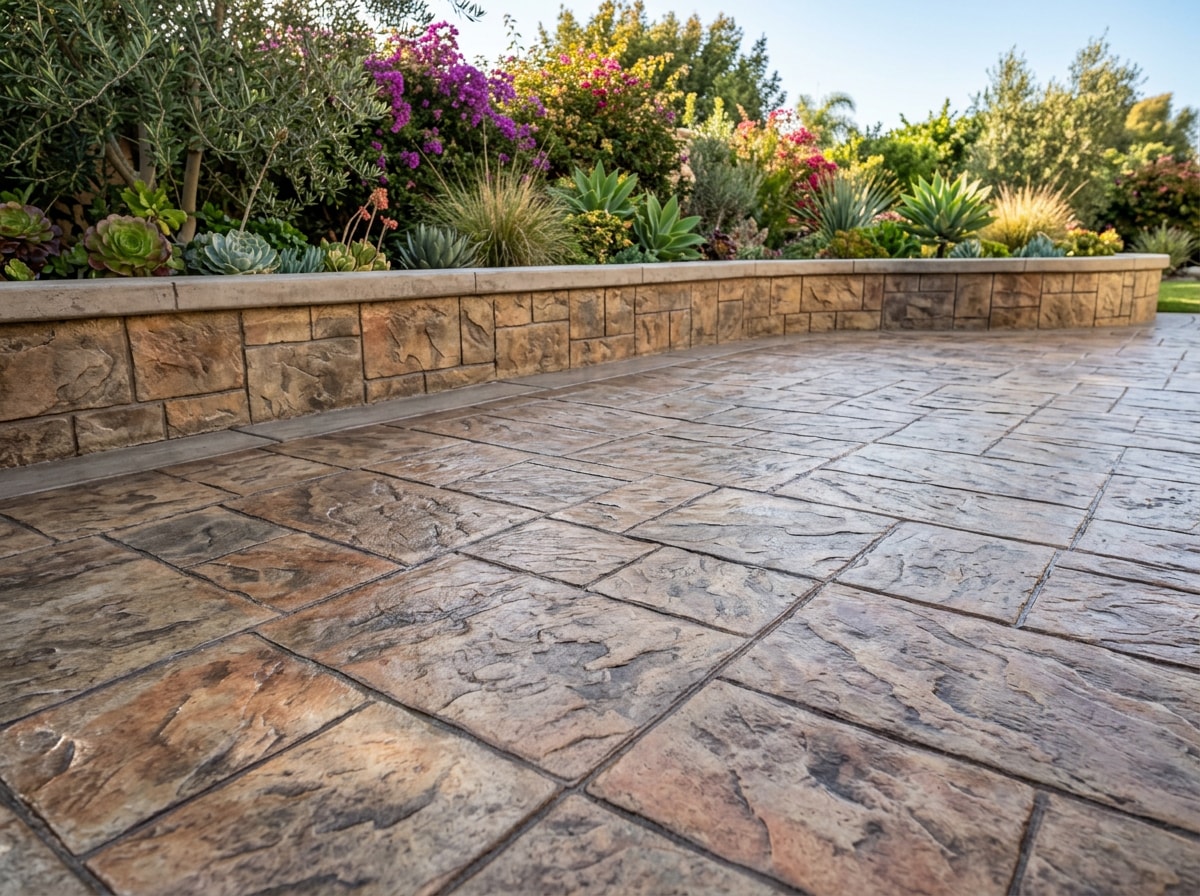
Stamped and stained patios hold up to furniture, grills, and daily foot traffic when the base prep and control joints are planned before the pour, not patched in afterward. Joint spacing isn't a guess. The American Concrete Institute's guidance on residential flatwork puts control joints roughly every 8 to 12 feet on a standard 4-inch slab, scaled to the slab's thickness.
Retaining Walls and Footings for Decks, Fences, and Pergolas
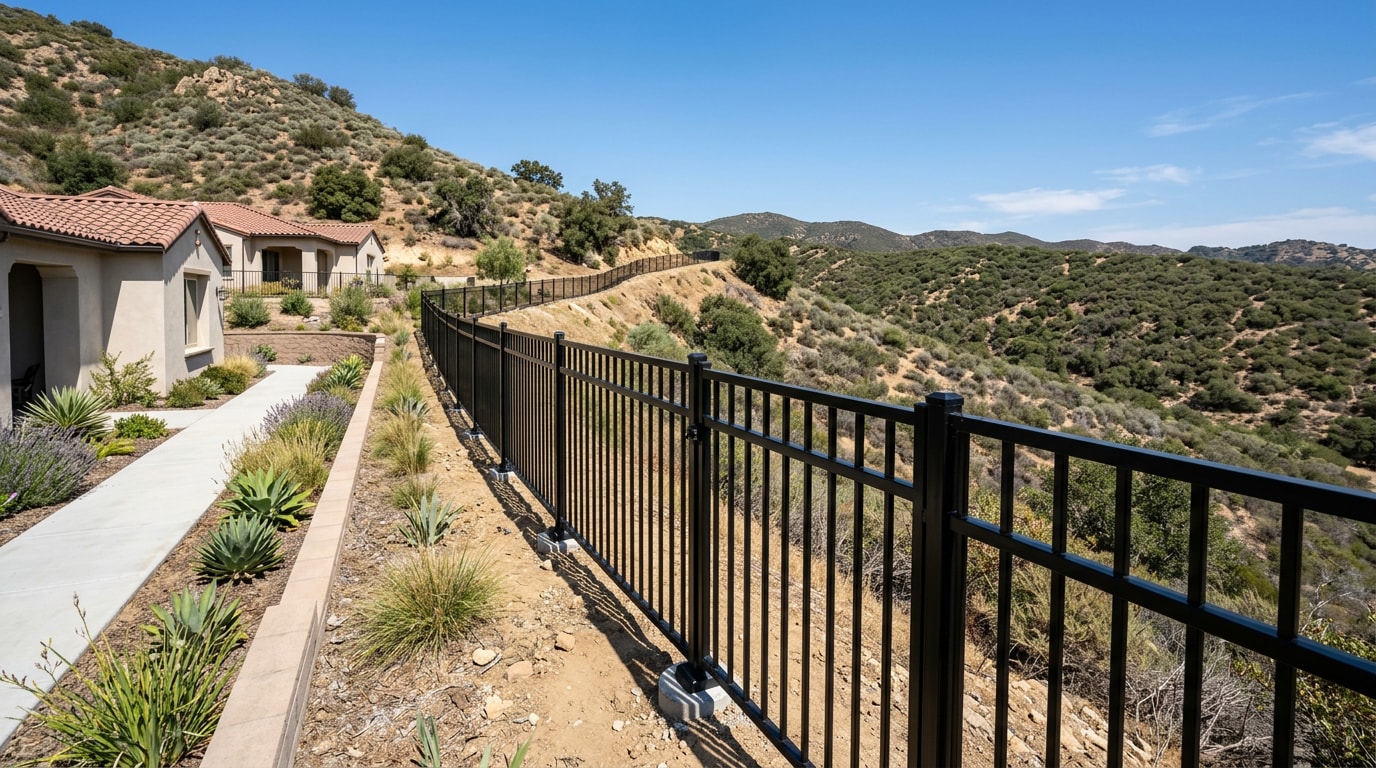
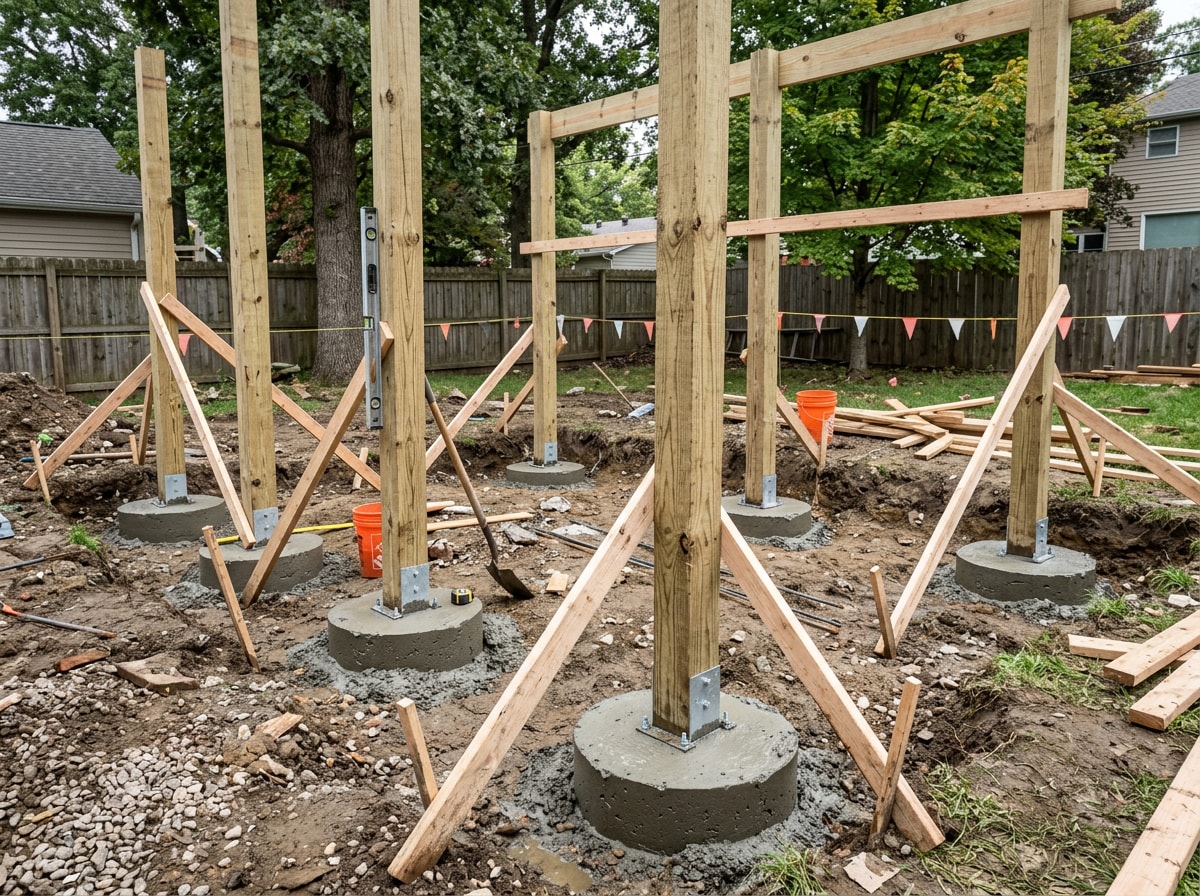
This is where a lot of Valley homeowners get stuck. A retaining wall, a deck footing, and a fence post footing are all concrete work, but most pure concrete shops won't touch the structure that goes on top. We build both sides of that line: the footings and the custom outdoor structures, pergolas, and decks that sit on them. One licensed contractor, one warranty, no gap between trades.
Licensing Rules Changed in 2025, Here's What Actually Matters Now
Most concrete-contractor pages in this market still quote the old $500 unlicensed-work threshold. That's outdated.
As of January 1, 2025, Assembly Bill 2622 increases the minor work license exemption from $500 to $1,000, but there is a catch: the work cannot require a permit, and the unlicensed person cannot employ anyone for the project. Both conditions have to be true at once. If the minor work is subject to a permit requirement of any kind, or if the unlicensed person hires one or more workers to assist or perform the work, a license is required, even if the project is less than $1,000.
For context, almost any real concrete driveway, patio, or retaining wall exceeds $1,000 and often needs a permit anyway, so the exemption rarely applies to the work covered in this guide.
Beyond the licensing threshold itself, every active California contractor must carry a $25,000 contractor license bond , along with current liability insurance and workers' compensation coverage. Don't take a contractor's word for any of this. Run the license number yourself through the CSLB's official Check a License tool before signing anything, and confirm the bond and workers' comp both show as active, not just the license status.
You can also read the CSLB's own bulletin on the AB 2622 threshold change if you want the exact language rather than a paraphrase.
How a Concrete Project With Oli's Wood Actually Works
Here's the process, in the order it actually happens on site, not the order a brochure lists it.
- Site evaluation. We check soil condition, drainage, existing grade, and anything that could affect the pour, before any design decisions get locked in.
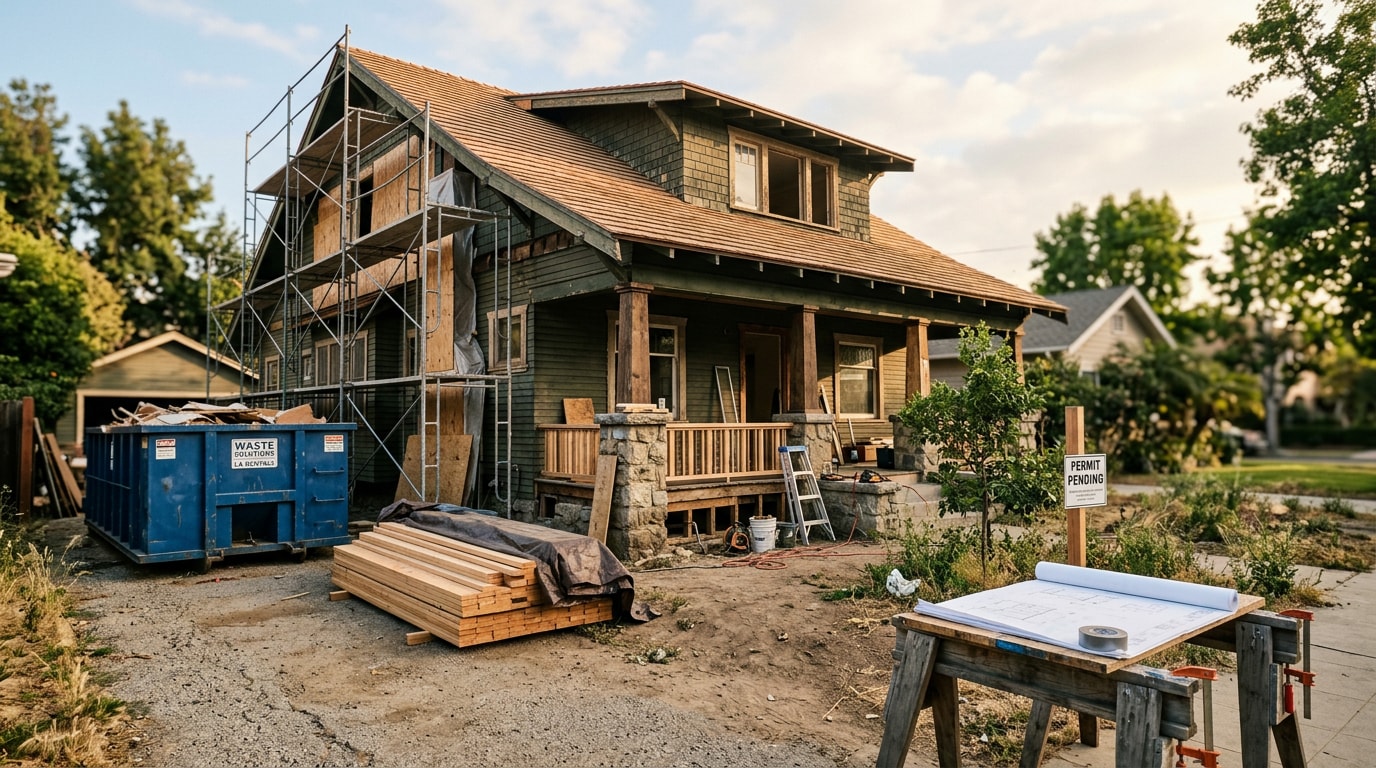
- Permit check. Burbank, Glendale, and individual Valley cities each set their own thresholds for what needs a permit. We confirm this before scheduling, not after.
- Excavation and base prep. Grading, compaction, and a proper aggregate base come first. This step gets skipped more often than any other, and it's the one that causes cracking later.
- Reinforcement and pour. Rebar or wire mesh is placed to spec, then the concrete is poured, screeded, and finished.
- Curing, jointing, and sealing. Control joints get cut while the concrete is still workable, and a sealer goes on once curing is complete. A written workmanship warranty should come with every finished project.
Need a firm number before you commit to any of this? Get a free estimate and we'll walk the site with you first.
Permits: What's Actually Exempt in Burbank
Permit rules are local, and they're more specific than most homeowners expect. In Burbank, masonry or concrete walls not over 6 feet high, and retaining walls not over 4 feet in height measured from the bottom of the footing to the top of the wall, are generally permit-exempt unless supporting a surcharge. Anything taller, or any wall holding back a slope with added load, needs a permit and plan check.
Driveway aprons, work in the public right-of-way, and most structural footings almost always require a permit regardless of height. Check the City of Burbank's Building Permits page before you assume a project is exempt. Glendale and the individual Valley cities run separate permit counters, so the same project might clear one city's threshold and not another's.
What Concrete Work Typically Costs
Pricing swings with finish, base condition, and access to the site, but here's the general range homeowners should expect to see on a bid in this market.
| Project Type | Typical Range (per sq ft) | What Drives the Price |
|---|---|---|
| Standard broom-finish slab | Budget | Thickness, base prep, rebar vs. wire mesh |
| Reinforced driveway | Mid | Excavation depth, demo of old driveway, slope |
| Stamped or stained patio | Mid to high | Pattern complexity, color coats, sealer quality |
| Retaining wall or footing | Varies by height/engineering | Height, soil load, whether engineering is required |
Treat any bid that skips base prep detail or jointing plan as a red flag, regardless of the number attached to it.
Service Area: Burbank, Glendale & The Valley
No two neighborhoods in this service area share identical soil, seismic exposure, or permit rules. We've poured and built in most of them.
| Area | Soil Notes | Permit Authority |
|---|---|---|
| Burbank | Clay pockets, moderate expansion | City of Burbank Building & Safety |
| Glendale | Adobe clay common in foothill lots | City of Glendale Building & Safety |
| West Hills | Mixed alluvial soil | LA County / local jurisdiction |
| Chatsworth | Rocky, variable drainage | LA County / local jurisdiction |
| Woodland Hills | Mixed alluvial and clay | LA County / local jurisdiction |
| Canoga Park | Mixed alluvial soil | LA County / local jurisdiction |
| Winnetka | Mixed alluvial soil | LA County / local jurisdiction |
| Tarzana | Clay pockets near hillside lots | LA County / local jurisdiction |
If your city isn't on this list, our homepage has the full coverage map, and we'll confirm coverage during your estimate call.
Why Oli's Wood Handles Concrete Differently
Natan Chkoury founded Oli's Wood Inc. and has spent over 15 years building decks, fences, and outdoor structures across the Valley, which means the company has poured footings under almost everything it builds. That's a different starting point than a concrete-only shop: we're not just finishing a slab and leaving, we're building the thing that sits on it. If you want to see that in practice, our projects page has completed jobs across Burbank, Glendale, and the Valley.
If your project also involves fencing, our team covers wood fence installation, fence replacement, and privacy fence construction.
Ready to talk specifics? Request your free estimate and we'll give you a written scope before any work starts, not a verbal ballpark.
FAQ
Do you need a licensed contractor to pour concrete in California?
For most real projects, yes. As of January 1, 2025, unlicensed work is only exempt if it's under $1,000 in combined labor and materials, requires no permit, and the person hires no workers. Nearly every driveway, patio, or retaining wall exceeds that threshold or needs a permit, which means a licensed contractor is required.
Are you licensed and insured to work in Burbank, Glendale, and the Valley?
Yes. Reputable contractors in this market carry an active CSLB license, a current $25,000 contractor bond, and workers' compensation coverage. Verify all three directly through the CSLB's Check a License tool rather than taking a verbal assurance.
Do I need a permit for a concrete driveway or patio?
It depends on height and location, not just size. In Burbank, for example, retaining walls under 4 feet (measured footing to top) are generally exempt unless they're holding back a surcharge load. Driveway aprons and work in the public right-of-way almost always require a permit. Check with your specific city's Building & Safety department before starting.
How much does a concrete driveway or patio cost per square foot?
It depends heavily on finish and base condition. Standard broom-finish work sits at the lower end of the market, while stamped, stained, or decorative finishes cost more due to pattern work, color coats, and sealing. Get a written, itemized bid rather than comparing single per-square-foot numbers between contractors.
What's the difference between a concrete contractor and a general contractor for this kind of work?
A pure concrete contractor typically stops at the slab. A general contractor who also handles decks, fences, and outdoor structures can carry the project from footing to finished structure under one license and one warranty, which removes the coordination gap between trades.
Why do control joints matter in a concrete patio or driveway?
Control joints create planned weak points so the slab cracks where you want it to, not randomly across the surface. Standard guidance spaces joints roughly 8 to 12 feet apart on a 4-inch residential slab, cut while the concrete is still workable.