Certified general contractors in Burbank, Glendale & the Valley are the difference between a remodel that passes final inspection on the first try and one that gets red-tagged mid-project. Each city in this corridor runs its own permitting rules, its own inspectors, and its own timelines, so a contractor who only knows one jurisdiction can slow your job down before it starts. This guide breaks down what "certified" actually means, what projects cost locally in 2026, and exactly how to vet a contractor before you sign anything.
What "Certified General Contractor" Actually Means
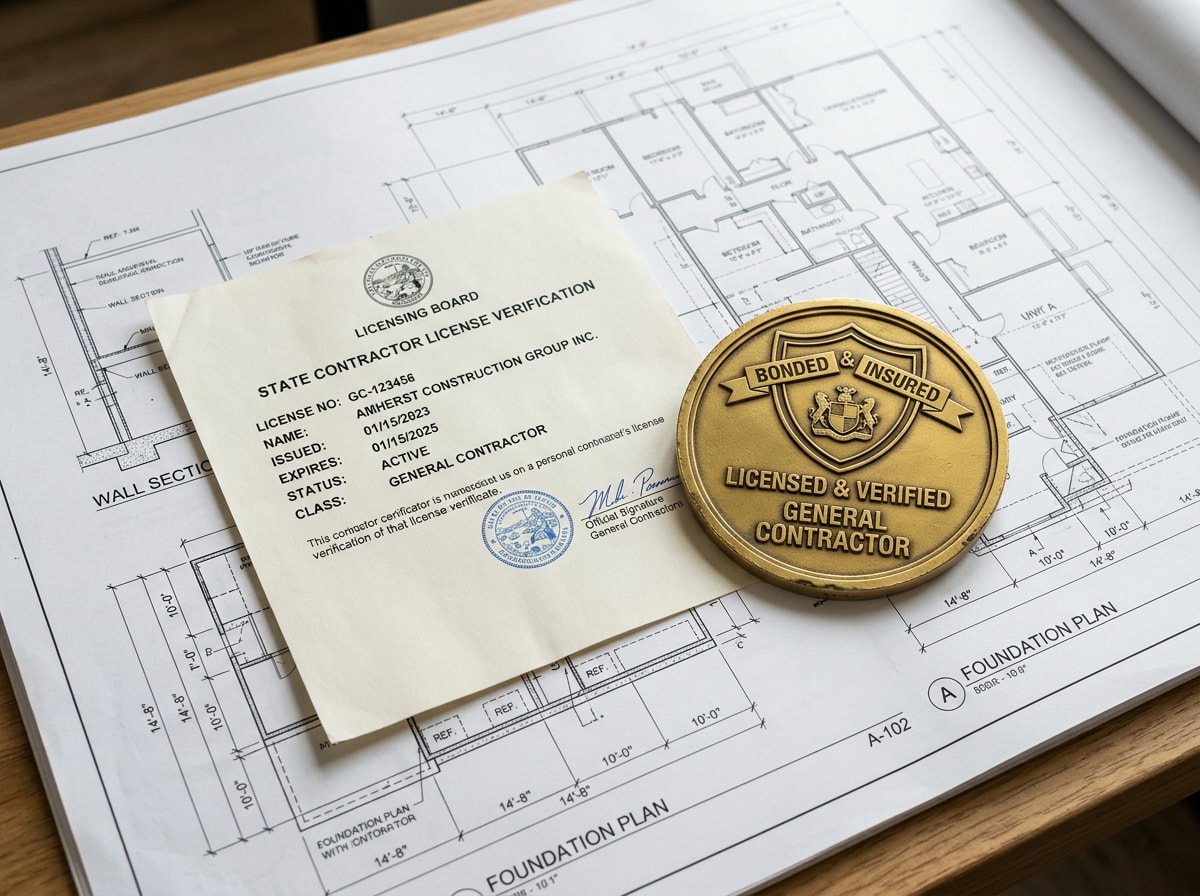
A certified, licensed, bonded, and insured contractor protects you from mechanics liens, unfinished projects, and personal liability if someone gets hurt on your property. Bonding gives you recourse if the job stalls or the contractor defaults, and insurance covers injuries or property damage during construction. An unlicensed operator simply cannot offer any of that protection.
Before you sign anything, look up the contractor's license through the CSLB License Check tool. Don't just confirm the license exists. Check four specific things:
- Current status — active, not expired or revoked
- Bond on file — California law currently sets the
contractor bond required by state law at $25,000
- Workers' compensation — active coverage, not lapsed
- Classification — matches the scope of your project
A B-General Building classification is the single largest license category CSLB issues, covering multi-trade projects like full remodels and additions rather than a single specialty trade. Skipping this four-point check is one of the most common, and most costly, mistakes homeowners make before hiring.
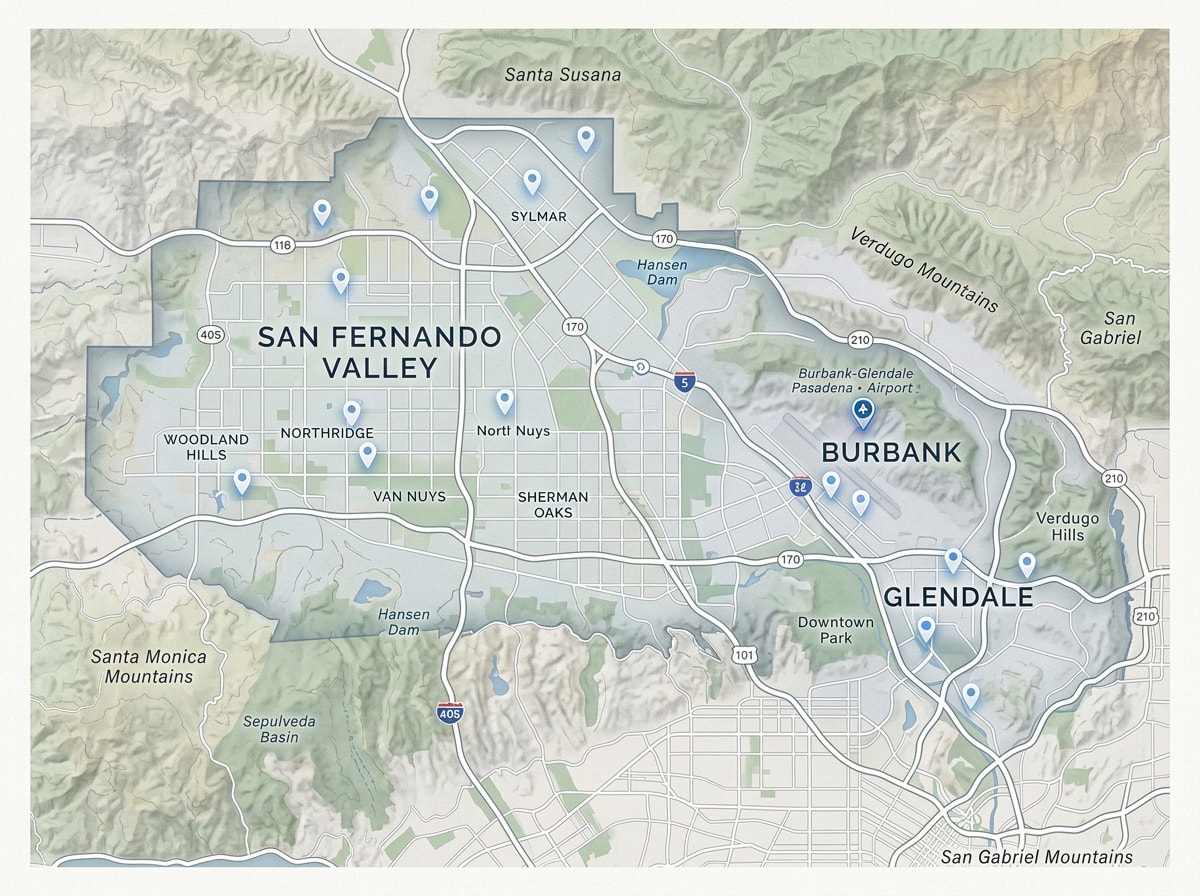
Service Areas: Burbank, Glendale & The San Fernando Valley
Each city here enforces its own permitting process. A contractor who's only pulled permits in one jurisdiction won't know Glendale's inspection queue or Burbank's plan-check portal, and that gap shows up as delays.
Communities We Serve in the San Fernando Valley
We work across the East, Central, and West Valley, including North Hollywood, Van Nuys, Sherman Oaks, Encino, and the western communities of Woodland Hills, West Hills, Canoga Park, Winnetka, Tarzana, and Chatsworth. Most of the Valley falls under the Los Angeles Department of Building and Safety (LADBS). Burbank and Glendale each maintain independent building departments with separate application portals, fee schedules, and inspection staff. Knowing which department governs your address before you apply for permits can save weeks of back-and-forth.
Burbank & Glendale Neighborhoods
We regularly work in Burbank neighborhoods like Magnolia Park and Toluca Lake, plus Glendale neighborhoods including Montrose and Verdugo Woodlands. Familiarity at this level matters because lot sizes, HOA rules, and hillside restrictions vary block by block, not just city by city. A local contractor who already knows a neighborhood's quirks can flag issues during the estimate instead of mid-construction. Visit our homepage for a full rundown of neighborhoods and project types we cover, or browse past projects completed in this corridor.
General Contractor Costs in Burbank, Glendale & The Valley
Understanding local pricing before you request quotes helps you evaluate bids intelligently instead of chasing the lowest number. The ranges below reflect typical 2026 project scopes; final pricing always depends on finish level, layout changes, and structural work.
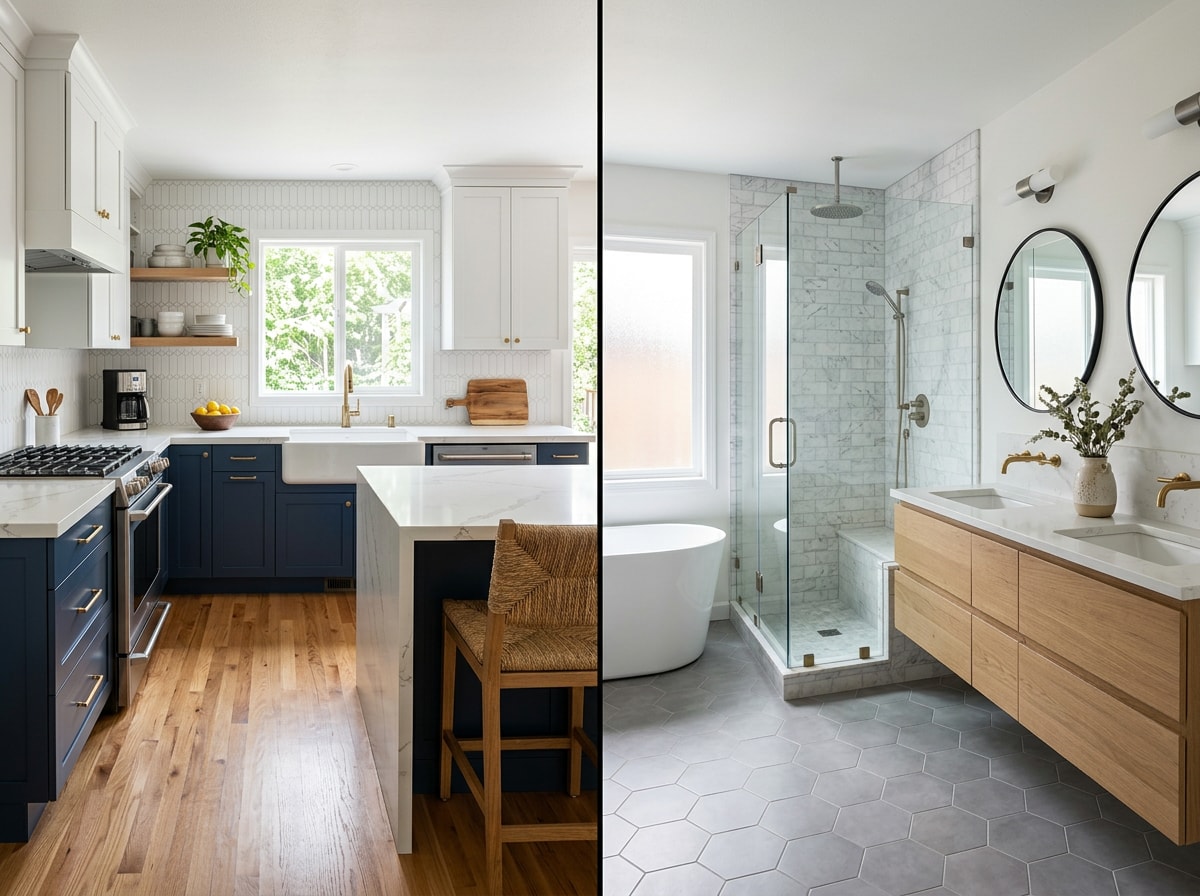
Kitchen & Bathroom Remodeling Costs
| Project | Burbank | Glendale | Valley Average |
|---|---|---|---|
| Kitchen remodel | $45,000–$85,000 | $42,000–$80,000 | $40,000–$78,000 |
| Bathroom remodel | $18,000–$35,000 | $17,000–$33,000 | $16,000–$32,000 |
Glendale and Valley pricing tends to run slightly lower than Burbank on comparable scope, though hillside lots in any of the three areas can push costs upward.
ADU & Room Addition Costs
ADU construction typically runs $180,000 to $350,000 depending on size, foundation type, and utility hookups. Room additions generally fall between $150 and $350 per square foot. Lot size, soil conditions, and hillside coefficient calculations all affect pricing, and permit complexity for detached ADUs can add several weeks and several thousand dollars to a budget that looked simple on paper.
Permits & Building Regulations by City
Treating Burbank, Glendale, and the Valley as one generic "LA market" is a common and costly mistake. Each enforces its own rules, timelines, and inspection standards.
Burbank Permits
Burbank splits permits into two tiers. Tier 1 permits cover simple repair and maintenance work that doesn't require plan check and can generally be obtained over the counter , while Tier 2 permits require plan check and zoning approval for additions, alterations, and new Accessory Dwelling Units . Properties in hillside zones also fall under Burbank's hillside ordinance, which adds grading, drainage, and height restrictions on top of standard review. Check the City of Burbank building permits page for current tier definitions and plan check timelines before finalizing your project schedule.
Glendale Permits
Glendale operates its own Building and Safety department, separate from LADBS, with its own application system and inspector roster. Homeowners moving between Burbank and Glendale projects should expect different forms, different fee structures, and sometimes different code interpretations, even for similar scopes of work.
Local Housing Stock & Construction Considerations
Much of the housing stock across Burbank, Glendale, and the Valley dates to the 1940s through 1970s. Older homes come with predictable issues: original knob-and-tube or early copper wiring, galvanized plumbing prone to corrosion, and framing built before modern seismic strapping requirements existed. A seismic retrofit is worth discussing with your contractor even if it's not the primary scope of your project.
Homes built before 1978 may also contain lead paint. EPA's RRP Rule requires that anyone paid to perform work that disturbs painted surfaces in homes built before 1978 be certified, with employees trained in lead-safe work practices . Testing before demolition isn't optional in these cases; it's a federal requirement. Review the EPA's Renovation, Repair and Painting Program guidance before disturbing painted surfaces in a pre-1978 home.
How to Choose the Right Contractor
- Verify license, bond, and insurance status through CSLB before requesting a bid
- Ask for at least three references from projects similar in scope to yours
- Compare bids line by line rather than by bottom-line total, since a lower bid often means missing scope, not better pricing
- Review the full contract before signing, even if a crew is available sooner than a competitor's
Contact us to request a written, itemized quote before you compare bids.
Common Home Remodeling Mistakes to Avoid
The most expensive mistake homeowners make is skipping permits to save time or money upfront. Unpermitted work can double total project cost once fines, forced rework, and resale complications are factored in. Choosing the cheapest bid without understanding why it's lower than competitors often leads to change orders that erase any early savings. Poor upfront planning and ignoring mid-project red flags, like missed deadlines, vague answers, and unexplained delays, tend to signal bigger problems ahead.
For a related build-out example, our recent post on the industrial contractor market across Burbank, Glendale & the Valley covers how the same permitting logic applies to commercial and light-industrial projects in this corridor.
Best ROI Home Improvement Projects
Kitchen and bathroom remodels consistently deliver among the strongest returns for local homeowners, along with ADUs that add rentable square footage. ADUs stand out in this market specifically because they add both livable space and separate rental income potential, a combination few other projects offer.
Full-Service Scope
A certified general contractor in this market typically covers kitchen remodeling, bathroom renovation, ADU construction, room additions, and structural repair, along with exterior work that many homeowners forget to fold into the same project:
- Deck construction and repair, including custom deck construction, composite deck installation, and deck replacement
- Fence installation and repair, including wood fence installation and privacy fence construction
- Carpentry and outdoor structures, including pergola installation and custom outdoor structures
Bundling exterior scope into one contract with your remodel or addition means one point of accountability instead of coordinating separate crews and separate warranties.
FAQ
How long does it take to get a permit in Burbank?
Simple interior remodels that fall under Tier 1 can sometimes get over-the-counter approval in one to two weeks. Room additions and ADUs fall under Tier 2 and typically require several weeks of plan check, depending on current department workload and project complexity.
How much does a general contractor charge in Burbank or Glendale?
It depends on scope. Kitchen remodels in this market typically run $40,000 to $85,000, and bathroom remodels run $16,000 to $35,000. ADUs and full additions run considerably higher. See the cost tables above for a breakdown by city.
How do I verify a contractor is actually licensed?
Use the CSLB License Check tool and confirm four things: active status, bond on file, current workers' compensation, and a classification that matches your project scope. Never rely on a contractor's word alone.
Do you work on older homes with potential asbestos or lead paint?
Yes. Homes built before 1978 for lead paint, and homes with older plumbing or roofing materials that may contain asbestos, are common across this region. We test suspect materials before any demolition begins, in line with EPA guidance.
What is design-build and how is it different from hiring separately?
Design-build puts design and construction under one contract and one team, rather than hiring a designer and contractor separately. This typically reduces miscommunication and change orders, since the same team manages the project from concept through completion.
Do you provide free estimates?
Yes. We provide written, itemized, no-obligation estimates so you can compare pricing clearly before committing. Request your free estimate to get a detailed project breakdown for your address and jurisdiction.